The Full Price Challenge (1/13): Origins
A year-long experiment in buying like you mean it.
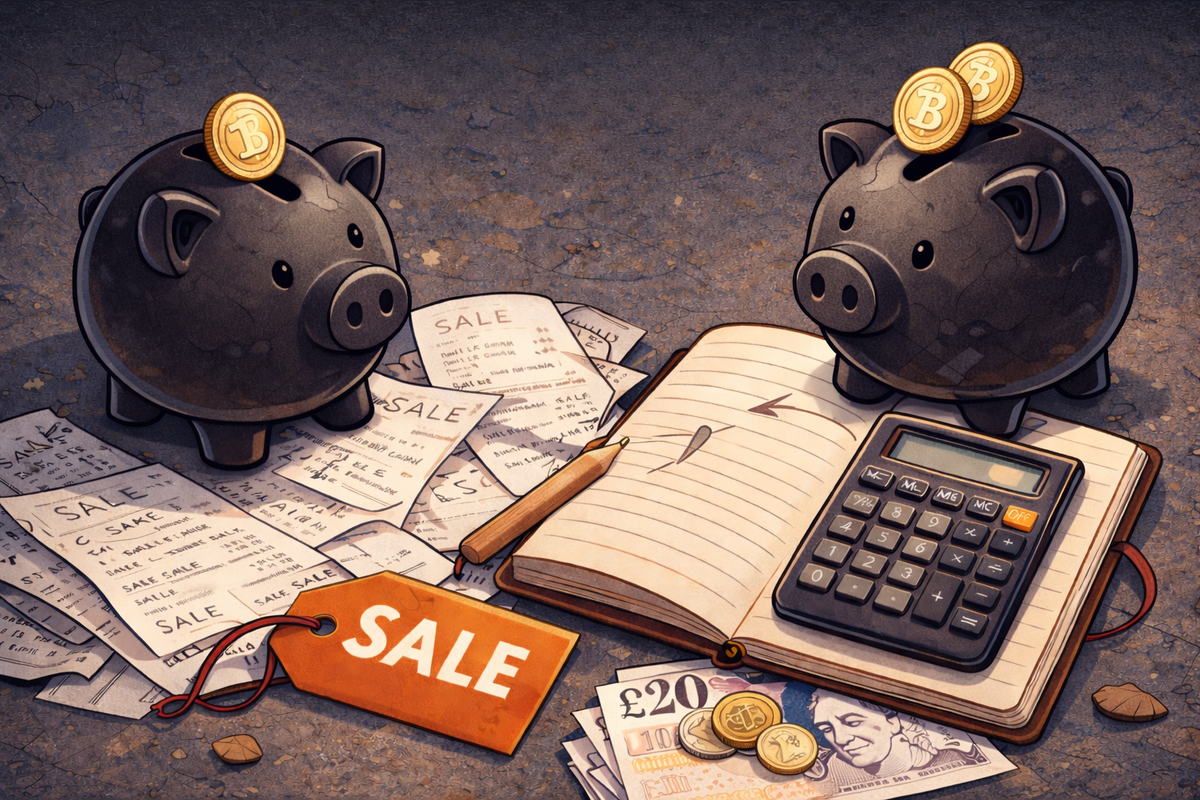
2025 brought the rise of the Monzo 1p saving challenge.
For those unfamiliar, the idea was simple: save 1p on day one, 2p on day two, all the way up to £3.65 on the final day of the year.
I liked the structure, but as I haven't banked with Monzo for many years, I would be unable to take advantage of the automatic transfers which made the challenge possible. Manually shifting pennies around felt like busywork. Ultimately, if I'm going to put time and effort into a savings challenge, I want it to challenge the way I spend money. Not ask whether I have spare pennies in my bank account at the start of each day.
2025 also delivered us the wonders of "Girl Math". I won't unpack that here, but one rule stuck with me:
"If it's on sale, you've saved the difference."
It's funny because it's objectively true, but also a lie.
Waiting for a sale is one of the most universal habits in modern consumerism. Summer sales, winter sales, Black Friday, Boxing Day. The underlying assumption is the same: "I can't justify this at full price, but with 20% off to sweeten the deal, the calculation is a little more favourable."
At the start of this year, I was disappointed that I hadn’t committed to a savings challenge in 2025. So I've decided to combine the things that actually interest me: the structure of a challenge, and the psychology behind discounts, to bring you my own bespoke challenge - The Full Price Challenge.
The Premise
Let's make "If it's on sale you've saved the difference" real.
All you need is:
- a separate bank account - savings, current, savings space, pot; it doesn't matter as long as it's free and you can transfer money to it freely.
- basic math skills (or a calculator)
The Rules
- Discounts: whenever you buy something below full price, the difference gets transferred to that bank account.
- Paid-for: whenever you go out for food or drinks and someone else pays, the full value goes into savings.
That's all.
Examples
- Bought a jacket: £150 down from £220.
- £70 in the pot.
- Someone else covered dinner, £35.
- £35 in the pot.
This isn't about cutting spending. It's an exploration into whether you believe your purchases are worth what they cost.
Sales are now a different kind of win and generosity turns into momentum instead of disappearing unnoticed.
The Experiment
I’m running this for 2026.
I’ll do a monthly roundup — not just of how much ends up in the account, but what changes in how I spend, hesitate, or justify things. If nothing changes, thats interesting too.
If you want to try it too, Feel free! Keep me up to date in the comments.
If you think it’s stupid, tell me why.
Either way, by the end of the year we’ll find out whether “If it’s on sale, you’ve saved the difference” is worth taking seriously, or whether thats just money you spent.